
At this point, there’s no escaping the fact that AI (which isn’t technically AI, but that’s the prevailing term so I’m going with it for ease) is going to play a big part in all of our lives for the foreseeable future.
Most of the ways it starts to appear won’t actually involve an appearance at all – it will start to handle tasks, systems and processes which were once the province of humans, and as end users we’ll be none the wiser.
Where it’s more obvious, however, is right in front of you. Many people use ChatGPT, Gemini or Claude on a daily basis, to search, research, and build their personal data pool until they can make a purchase decision on a product or service. AI search will soon become the default option when Googling, and even more people will begin using it as a result.
How do you optimise for AI search?
This is the $64,000 question. ChatGPT has been with us for a few years now, as has a form of Google’s AI in Bard, and then Gemini. Their capabilities constantly evolve, and as they become more embedded in the ecosystem that is search, companies are starting to realise that, particularly with ChatGPT, there is a new marketplace in which they want to be seen.
As with any desirable goal, services showing the route to achieving that success has become an industry in itself. There are already services available which will show you how to appear in more AI searches, and having tested some I’m here to say that… they don’t really work. Or at least, not yet.
The science of getting to the top of Google was decades in the making
It’s easy to forget that there was a time when we didn’t have reliable tools to show us keyword performance in Google. It’s slightly more difficult to forget that during those years Google would frequently move the goalposts, as they’re still doing it, but ask anyone who’s worked in SEO for long enough, and they’ll have a story about a site which was caught in a Google algorithm update and lost a large amount of their keyword rankings, possibly for reasons that remain unknown to this day.
That’s essentially where we are again. Companies are rushing to develop tracking capabilities, and some egos are already making promises that the body can’t cash.
What can AI search tracking currently do?
It can do a bit, although due to the emergent nature some of the price tags struggle to justify the outlay. We can see which keywords led to your company appearing in Google’s AI overviews. We can see which companies are appearing for certain desirable searches. We can even audit a site for “AI readiness”.
That sounds pretty good, for a new industry. Here’s how it actually worked for us, though.
Keywords in AI Overviews
This was helpful. Despite being a small part of the bigger Google AI picture, knowing when companies appear in AI Overviews is useful from a success point of view for your content, and it also can clarify either a lift or drop in traffic to the page as a result.
Which companies appear for which searches
This is where it falls apart a bit. Currently, the more reasonably priced end of the market relies on credits to check for results. In order to find the results, services will suggest searches related to what you want to be found for, but the issue is that unlike Google’s keyword approach, AI needs to run the full query in order to return a result. That means that you’ll need to anticipate every single variation in the way your question is asked, along with having enough credits available to service those searches.
That’s a lot of credits.
AI readiness audit
This is where it fell apart a bit. The particular SaaS we were trying, which I’m not going to shame publicly (but I’m happy to disclose to anyone that wants to drop me an email) carried out an audit on the same site we’d trialled with the company search. The results were that their site was overall in great shape, with a good level of optimisation that would help AI platforms to parse their content.
However, there was a recommendation to include more citations in content (AI has been generally more likely to cite a website which in turn cites other companies and organisations in its content), and a failure which was both telling and puzzling in equal measure – no LLMs.txt file was in place.
What is LLMs.txt?
Currently, most websites use a file called robots.txt to explain how the site is structured to Google’s search robots, which constantly crawl the internet looking for new websites and new content on existing sites.
AI Search platforms use similar technology to gather the data they use to answer questions (at least, they do now – earlier versions couldn’t access any data outside of the set they were trained on, while current models can conduct web searches so they’re up to date). The proposal is that every site would implement the LLMs.txt file as standard to explain to the AI what the site is about, and give answers to the questions it is trying to answer.
However, that model is open to abuse – you could vary the answer from the one on the website, and an AI wouldn’t double-check as the LLMs.txt file is designed to remove the need to visit the website page. This could lead to some gaming of the system in order to gain more mentions, and also makes it even more difficult to ensure that AI search returns accurate and trustworthy information.
The upshot of this is that no AI firm has adopted the LLMs.txt standard, and it’s difficult to imagine they ever will. Searching the live pages of a site provides the same information and reduces the risk of “gamed” information being given out.
And that leads us back to the reason for this article. Why would a service that promises to audit your website for AI-readiness recommend that you implement a file which achieves nothing?
The answer is that no one knows how to optimise for this technology yet.
It makes paying for something that promises the key to success a risky proposition, but hard to resist – if it really is the key, you get ahead of the competition.
How can you achieve success in AI Search?
At the moment, the “science” of this is the same as succeeding in old-school search optimisation. You need to have easy to read, comprehensive information on whatever it is you do, it needs to be accessible to users and search engines, and it needs expert insight that makes it worthwhile for both human and machine readers. We can help you to implement this, just get in touch.
Last night our Group Director, Tina Fairminer, and our Operations Director, Sarah Harris, were at the Indigo at the O2, attending the 2025 eCommerce Awards, where we’re thrilled to announce that Webselect brought home Silver for Best Boutique eCommerce Agency!
We’d like to say a massive thank-you to our incredible team, our clients, and everyone who has supported us on this journey. This recognition means so much – especially because the “Best Boutique eCommerce Agency” category celebrates agencies like ours that deliver highly specialised, optimised, and impactful eCommerce solutions.
What are the eCommerce Awards?
- The eCommerce Awards were launched in 2007 to recognise outstanding performance, innovation, and leadership in the online retail space.
- They bring together the best minds in the industry – brands, agencies, technology providers — to celebrate those pushing boundaries in digital commerce.
- The “Best Boutique eCommerce Agency” category in particular honours smaller, more nimble agencies that go the extra mile in creating bespoke, high-impact eCommerce experiences.
Last night’s ceremony
The awards took place at Indigo at The O2, London on the evening of the first day of the eCommerce Expo. It’s a spectacular venue, and with hosting from Rob Broderick (Abandoman), everyone had a night to remember.
What this means for us
Winning Silver is a testament to:
- Our team’s dedication, creativity, and technical excellence
- The trust and collaboration of our clients
- Our commitment to delivering only the best when it comes to eCommerce solutions
We’re proud to stand among the top agencies in the space, and this win only strengthens our resolve to keep pushing further.
If they’re not already sick of it, we’d love to thank everyone involved – from our staff and contractors to our clients and partners – for helping us reach this milestone. Here’s to even greater things ahead!
When planning a replatforming project or launching a new online store, one of the first questions is whether your business needs a fully bespoke ecommerce website – or whether a tailored platform like SelectCommerce is the smarter move.
At Webselect, we offer both. SelectCommerce is our own ecommerce framework – designed to meet the needs of growing online retailers who want flexibility and performance without reinventing the wheel, and offering three packages designed to meet both your business needs and your budget. But we also know that some businesses need something altogether more custom, which is where SelectCommerce Ultimate comes in.
So how do you decide?
Here’s a guide to help you understand which level of SelectCommerce is the ideal choice – and when a bespoke ecommerce build through SelectCommerce Ultimate might be worth the investment.
When to Choose SelectCommerce
SelectCommerce is built for ambitious ecommerce businesses who want speed, performance, and ease of use – without the cost or complexity of building something from scratch. We offer monthly payment plans that include the price of setup and professional input from our team on how to use it.
Choose SelectCommerce if you:
1. Want to escape the limitations of off-the-shelf platforms
Many ecommerce platforms offer basic templates, but as your needs become more complex – multi-channel selling, third-party integrations, additional functionality – so does the pricing structure. SelectCommerce has been designed to cover everything you need in the monthly price, and to scale with your business as you need it to do more.
2. Need flexibility without the price tag of fully bespoke
With SelectCommerce, you get a platform that’s tailored to your business, but based on proven, well-supported architecture. It has the functionality you need built in, without locking you out of the best features due to compatibility issues or the need for third-party apps.
3. Want to improve site speed, SEO, and conversion rates
We built SelectCommerce using cutting-edge research, and have continued to iterate using feedback from our clients. It’s got great performance, with SEO enhancing features and conversion-rate optimising page layouts.
4. Are scaling – and want a platform that scales with you
Whether you’re expanding your product range, targeting new international markets, or increasing your marketing spend, SelectCommerce is designed to handle growth. It avoids many of the pain points found in mainstream platforms when traffic or operational demands increase.
When to Choose a Bespoke Ecommerce Website
There are times when even the best framework can’t deliver what your business truly needs. If your operations, user journey, or product offering are highly specific, a completely bespoke solution may be the better route. SelectCommerce Ultimate is able to offer this level of freedom.
Go bespoke with SelectCommerce Ultimate if you:
1. Have a highly unique business model
If your ecommerce store involves a non-standard purchasing flow (like subscriptions with complex rules, dynamic product builders, or B2B tiered access), a bespoke platform gives you the freedom to build exactly what you need.
2. Need control over precise components
Bespoke builds are ideal for businesses who want to control every technical and design decision – from database structure and front-end delivery to complex back-end operations and CRM integrations.
3. Are building something that doesn’t exist yet
If you’re bringing a truly original concept to market – something innovative that doesn’t resemble a traditional ecommerce setup – bespoke development lets you create a platform that supports your idea from the ground up.
4. Have the time and budget for a full build
Custom websites take more time and resources than platform-based solutions, and that’s reflected in our price structure. If your timelines and budget allow for this level of investment, and your long-term plans justify it, then a bespoke build can be a powerful competitive advantage.
The first three tiers of SelectCommerce offer a compelling middle ground between generic ecommerce platforms and fully bespoke builds. It’s perfect for businesses that need tailored functionality, high performance, and scalability – without starting from a blank slate.
But we’re also here for those businesses with unique needs that demand a one-of-a-kind solution.
We won’t push one approach over the other, because we believe that the correct answer is always the one that’s best for your business.
Thinking about starting in eCommerce, or moving your site?
Get in touch, and let’s talk through your business’s aims and challenges so we can help you find the SelectCommerce package that you need.
It’s been a while since the last news on a Google algorithm change, and it looks like the dust is now settled from the mid-March Core algorithm update, although some of our sites have only started to level off this week.
The results have been less dramatic than the back-to-back updates in December, although some sites that had made significant and continuing gains since that update rolled out have seen the results diminish somewhat.
General consensus is that this update has affected sites that use forum-based content, which are mostly going to be forums (but not Reddit, which we’ll discuss later) or that have engaged in heavy usage of AI-based copy to rapidly scale their content strategy. The headline sector to be affected is retail, which is unwelcome news given all the other pressures currently being exerted on retailers.
What can you do if a Google Core update affects your rankings?
The official guidance from Google is always to do nothing, as the altered performance for your site will be in line with the, if we’re being honest, shifted goalposts that the update represents.
This is problematic for two reasons. The first is that businesses that have been experiencing a certain level of trade linked to higher places in the rankings will now see that decline or even stop altogether. The second is more a point of pride than anything else, but some of the sites that are now top ranked are not as good as the sites they’ve replaced, which does tend to raise questions about where the benefit to the user is.
When looking at your recovery, the most helpful thing to start with is a list of the keywords you’ve gained and lost, and improved and declined. Not all are created equal and you might find that although the numbers are lower, the traffic and the intent for those you’ve dropped means you aren’t any worse off.
If you find that this best case scenario isn’t representative of your experience, it’s time to grab that list of keywords and work out where your targets are.
Once you know where you need to improve, you can then start putting a plan together. Have the pages that ranked for those keywords had a lot of love put into them, or have they been static for long enough that it’s time for an overhaul? We know from Google’s algorithm leak last year that they keep track of page updates over a span of time, so it’s a sensible place to start.
If the page has been receiving frequent updates (and consider if they’re too frequent, so might have negatively affected the quality), look at what you can do around the page to support it with a “pillar-based” SEO strategy, where it becomes the central repository for targeted pages that support your keyword targets. If that doesn’t help, what we’re going to discuss next might be of interest.
Take a look at Reddit
Reddit has flown under the radar for certain generations, and in a post AI-overview world that should change.
Not only are brands making a space for themselves by setting up accounts and discussing what it is they do with already engaged audiences (it’s important to declare your affiliation to the brand, but that doesn’t have to be a negative), but Reddit has already been and will, with the provision of the new license they’re offering, continue to be a training ground for Generative AI.
Google’s AI overviews are the next big thing
Google’s AI overviews are now appearing for more and more searches, and offer both a source of frustration and a lifeline to brands. Recent changes mean they could pull the information from any site, not just sites already ranking in the top ten, which is an invitation for brands to leapfrog huge industry players and end up at the top of page one.
The science behind making this happen is still in its infancy, but as we know one of the places that the GPTs are being trained, it makes sense to establish a foothold on that platform.
Google’s becoming the snake that eats its own tail
A slightly less welcome development this month has been the inclusion of Google search results in AI overviews. This means the chances of a zero-click search have risen (this is a search where the answer is found without ever needing to land on your website), and traffic overall has fallen as a result of people not needing to leave Google to get what they want.
This will be especially unwelcome for businesses that rely on this traffic for the occasional impulse purchase or even just to place their brand in the mind of users landing on a popular blog.
Expert help with your search results
If you’d like a chat about your site’s performance, or need an accurate picture so you can start keyword planning, get in touch. There are no easy answers or fixes when it comes to organic search, but that doesn’t mean we can’t help.
On Friday, March 14th, 2025, Tom, Hein, Rob, Craig and Sarah gathered for a memorable day of tree planting with Moor Trees in picturesque Dartmoor, specifically in the village of Bridestowe. Not only did we get the chance to bond and contribute to the environment, but we also had the perfect weather for a day outdoors – blue skies, sunshine, and no rain clouds in sight!
Meeting Our Guide: James and His Trusty Pup
When we arrived, we were welcomed by James, our guide for the day, who shared fascinating insights about the project. Alongside him was his adorable 4-month-old puppy, Frank, who was an instant hit with everyone and joined in at any opportunity. James explained that the field we were working in would one day transform into a thriving natural woodland in the next 15-20 years—a beautiful, long-term vision that made our efforts that much more meaningful.
The Tree Planting Process
James gave us a brief demonstration of the tree planting process, which was both simple and fulfilling:
- Digging the Hole: First, we dug a hole the width and depth of a spade, carefully removing the top layer of turf. The soil needed to be broken up so that it would fill the hole around the roots of the young tree, giving it the best chance to grow.
- Planting the Tree: We placed the young tree into the hole, making sure the roots were well-positioned. Afterward, we packed the soil back around the tree, stamping it down firmly to eliminate any air pockets.
- Protecting the Tree: To keep wildlife away from the young tree, we attached a cane to each tree and wrapped it with a protective bio wrap.
- Mulching for Growth: The final step was placing a mulch mat around the base of each tree to help retain moisture and protect the roots. We secured the mat with bamboo pegs to ensure it stayed in place.
In total, we planted 150 native trees of varying species, including Oak, Hawthorn, Hornbeam, Silver Birch, and Beech—species that are native to the Dartmoor area and will one day thrive in this new woodland.

A Delicious Break: Homemade Pizza and More
After several hours of planting, we were treated to a delicious homemade lunch by our hosts, Terry and Jane. Their kitchen offered a warm and welcoming atmosphere, where we enjoyed homemade pizzas, crispy chips, and an assortment of cakes and cheeses. The food was the perfect way to refuel after a productive morning of tree planting.
Reflecting on the Day
The experience was not just about planting trees—it was a chance for us to connect with nature, contribute to a sustainable future, and strengthen our bonds as a team. As we left Dartmoor that afternoon, we knew the trees we planted would grow alongside our team spirit, standing tall in the years to come.
This day of team building with Moor Trees was a reminder of how small actions can lead to big changes, and we’re proud to have been a part of it.
Replatforming your eCommerce site might sound like a daunting prospect, and it’s easy to see why business owners can feel a bit jittery about making the leap. With over 25 years in the eCommerce business, we’ve witnessed firsthand how the idea of switching platforms—moving, say, from WooCommerce or Magento to Shopify or our own solution, SelectCommerce—can stir up a lot of concerns. However, when approached thoughtfully, replatforming isn’t just a technological upgrade; it’s a strategic investment in the future of your business.
Understanding Replatforming
Basically, replatforming is migrating your online store from one platform to another. This change might be needed for several reasons that usually arrive at the same time: your current system is outdated, unable to handle increased traffic, or simply not providing the flexibility your business needs. We can help with a move to Shopify, which is a market-leader, or to our own SelectCommerce, which gives you freedom from scaling app fees by including everything in one price, but the goal remains the same—to set up your business for better performance, scalability, and an improved customer experience.
The common replatforming headaches
Many business owners have the same worries when it comes to replatforming:
- Data Integrity and Downtime: Losing customer data or facing extended periods of downtime can feel like the worst-case scenario. The reality, however, is that with thorough planning and expert execution, you can minimize these risks significantly. A robust migration plan ensures that every piece of critical data—from customer records to order histories—makes it safely to the new platform without causing service interruptions.
- Cost Considerations: The prospect of upfront costs can be intimidating. It’s important to think of replatforming as a long-term investment rather than an expense. The improved functionality, greater scalability, and enhanced customer experience you gain from a modern platform can lead to better operational efficiency and increased revenue down the line.
- Technical Hurdles: Transitioning between platforms often means tackling technical challenges, such as integration issues or compatibility problems with existing systems. While this can sound overwhelming, a step-by-step approach that includes careful planning, testing, and quality assurance can make the process manageable—even for those who aren’t tech experts.
- Managing Change: Every replatforming project brings about changes that affect your team’s workflow and your customers’ experience. Adjusting to a new system can be disruptive initially, but with proper training and support, these transitions can be smoothed out, paving the way for long-term improvements.
The Replatforming Process
A well-executed replatforming project is broken down into several key phases. Here’s an overview of how the process typically unfolds:
- Assessment and Planning:The process begins with an in-depth assessment of your existing system. This stage involves identifying current pain points, evaluating performance metrics, and clarifying your goals for the new platform. At this point, having a detailed migration roadmap is crucial. It serves as a guide to ensure every step is carefully managed, reducing the likelihood of unexpected hiccups along the way.
- Platform Selection:Next comes choosing the right platform. Many businesses find that upgrading from an outdated system to either SelectCommerce or Shopify brings numerous benefits, including a modern design, extensive integration options, and strong community support. With SelectCommerce we include three months of support, so you won’t be left scratching your head with any of the features.
- Data Migration:Transferring your data is one of the most critical parts of replatforming. This phase involves moving all essential information—product listings, customer details, and past orders—from the old system to the new one. Using the right tools and best practices, we can safeguard your data throughout the transition, ensuring everything arrives intact and ready for use.
- Design and Development:Once your data is successfully migrated, the focus shifts to building an engaging storefront that aligns with your brand. This phase is collaborative, involving designers, developers, and key business stakeholders. Whether you’re working with Shopify or SelectCommerce, the aim is to create a site that is both visually appealing and functionally robust.
- Testing and Quality Assurance:Before the new site goes live, thorough testing is essential. This stage covers everything from functionality checks and user acceptance testing to performance evaluations. The goal is to catch any issues early, ensuring that when your customers visit the new site, they enjoy a seamless experience without any glitches.
- Launch and Ongoing Support:Finally, your new site is launched. But the process doesn’t end there. Post-launch support is critical to address any unforeseen issues and to help your team adjust to the new system. Continuous monitoring and optimisation ensure that the platform evolves along with your business needs, keeping you ahead in a competitive market, which is why our Select Supreme package includes ongoing search optimisation support as standard.
How can you tell when it’s time to replatform?
There are a lot of things that might point to a need to replatform, but the most obvious one is pretty simple – time. If your site’s not had an update in the last five years, you’ll already be noticing most of the other warning signs.
These include slow performance on both the front and in the background of the website, difficult to manage or even nonexistent integration with your inventory system, and a general lack of helpful functionality.
We all know that technology moves on at a pace, which is why we replace our computers and smartphones regularly, but the same isn’t always true for our eCommerce platforms. Limited scalability and a clunky interface could be costing you both sales and customer satisfaction, so why not set aside the time to investigate?
Grasping the nettle, taking the bull by the horns and biting the bullet
While the thought of replatforming naturally stirs up a sense of apprehension, you can view it as an opportunity rather than a risk. It’s a bit like moving house – the process can be long, and it’s detail heavy, but once completed the possibilities are endless. The temporary challenges are outweighed by the long-term benefits: a more agile operation, improved user experience, and the capacity to scale effectively with market demands.
We’ve guided numerous businesses through replatforming, helping them transition smoothly and confidently into the future. With careful planning, clear strategies, and ongoing support, the shift to a new platform—be it Shopify or SelectCommerce—can be a transformative step that revitalizes your eCommerce operation. Having the right agency at your side (as a partner, not one that sees you as a product) can really reduce the pain. Drop us a message or give us a call today if you’d like to find out how we can help.
On 12 December last year, Google started the rollout of its latest Core algorithm update, which finished on 18 December and was immediately followed by an update to Google’s Spam detection algorithm on 19 December. The core algorithm update caused noticeable shifts in rankings across various industries, but many website owners are reporting seismic changes from the spam update.
What Are Google Core Algorithm Updates?
Google’s core algorithm updates are broad changes designed to improve the relevance and quality of search results. Unlike specific updates targeting particular issues—like the Helpful Content Update or the Spam Update—core updates refine how Google assesses and ranks content overall. These changes can influence visibility in search results significantly, as it essentially moves the goalposts for judging successful content. Sometimes they move more than others, which is why it’s entirely possible that your site may have been through previous updates without being affected.
Who has been negatively affected by the December 2024 algorithm update?
Reports from the Core update indicate these kinds of site have been affected:
- E-commerce Websites: Some online retailers have reported a decline in search visibility. This may reflect Google’s increased focus on distinguishing high-quality, authoritative product pages from thin or repetitive content. Sites with poorly optimized product descriptions or lacking user reviews may be particularly vulnerable.
- Informational Websites: Informational content publishers, especially smaller niche sites, have faced challenges. Larger generalist platforms with diverse, authoritative content have seen gains at their expense. This shift suggests Google is prioritizing sites that offer comprehensive, multi-faceted coverage over narrowly focused expertise.
- Affiliate and Ad-Heavy Sites: Websites relying heavily on affiliate links or ads without providing unique value to users appear to have been negatively impacted. Google’s guidelines emphasize content that serves user needs rather than solely commercial interests.
For the Spam update, we know that it was a general update rather than being aimed at a particular kind of spam, but we don’t know if the criteria have changed. There’s been no change to Google’s list of the kind of content and behaviour to avoid, but many affected sites are adamant that they aren’t using spam-adjacent tactics, which would at least have gone some way to explain things for the sites where traffic has almost completely disappeared post-update.
Why does Google update their Core algorithm?
As with all tech, changes outside the Google ecosystem will mean there is searchable content which they need updates to correctly interpret. As a very top-level overview, they will be looking for:
- Quality Over Quantity: Thin or duplicate content has become a target, with Google rewarding sites that offer depth and originality.
- Authority and Expertise: Sites demonstrating experience, expertise, authoritativeness, and trustworthiness (E-E-A-T, Google’s own recipe for search success) continue to perform better.
- User Experience: Pages with excessive ads, poor mobile usability, or slow load times may face penalties.
Google’s Spam criteria
If you want to read Google’s full policies you can click here. If you’d rather read my interpretation, which is admittedly much shorter, here it is:
- Cloaking – showing a different page to search engines than the one seen by website visitors
- Doorway abuse – pages that just exist to send people to other pages on the website
- Expired domain abuse – buying the expired address for a legitimate website to send people to a junk sales site
- Hacked content – having pages on your site that have been hacked and not repaired
- Hidden links and link abuse – hiding links on a page that are just there to affect search results
- Keyword stuffing – too many of the same keywords in your site content
- Link spam – buying links from an online service. These are usually spammy sites so easy for Google to recognise.
- Machine generated traffic – traffic from bots, which are programs created to pretend to be people
- Malware – linking to malware downloads
- Misleading functionality – telling people you’ve got a feature, but the feature doesn’t work
- Scaled content abuse – adding loads of pages which have AI-generated content and don’t actually help your users
- Scraping – copying content from elsewhere
- Sneaky redirects – using something called a redirect to send people from Page A to Page B automatically
- Site reputation abuse – pretending to be someone else
- Thin affiliation – publishing content from a shop site so it looks like you are the shop owner
- User-generated spam – having rubbish in reviews or forum comments, (you’ll often see this promoting pharmaceuticals)
Can your website recover from an algorithm update?
Yes, but it might take some hard work and an undefined amount of time. Sometimes a subsequent update will undo the damage, but generally speaking if you’ve come a cropper, there’s something about the site you could be doing better, and that means identifying it, actioning improvements, and continuing to build back using the age-old technique of creating high-quality, relevant content.
Our guide to Search Engine Optimisation basics will get you started, but we’re also here to help in a hands-on way – there’s definitely correlation between maintaining, or even improving your search rankings, and having a well-optimised site. Drop us a line if you want to discuss the options.
For years now, the future of marketing has been seen as video content. Generally speaking, it connects differently with audiences than text content, because it’s quicker to digest and a more engaging medium. It’s also versatile, because a longer video can be recycled into ads for use on social media.
The downside to that is the perceived difficulty and expense of generating video content.
How can I make video content on a budget?
First, let’s not get carried away with all this video freedom. Good video content takes planning, and if we skip that phase the end result is going to be messy.
Set out the objective of the video you want to make, and the details of how you’re going to achieve that. Do you want to sell a product, are you trying to pass on some knowledge about your company, or is it something else? These questions will help you plan it out:
- Is that the right format for the job?
- What are we making a video to achieve?
- Does it need to feature real people or a voiceover, or can it be done with text?
- Does it need any graphic design work done ahead of time?
- How long does it need to be?
Generally speaking, I divide my video content into three categories:
- Video that doesn’t need a human involved
- Video that needs part of a human involved (usually their voice)
- Video that needs to be all people in the middle, with an intro and outro to make it look professional
Category one needs me to plan out the story of the video, but the information will be conveyed with short bits of text and using images so it doesn’t need as much prep as categories two and three.
If there’s a human being involved, though, it’s important to write a script out before you start. This will keep your message on target, and also keep you from ending up with lots of footage that you need to edit.
Recording footage on a budget
Part 1 – recording people
If your video needs a real person, this section is for you. If it doesn’t, you can skip to the next section.
Your secret weapon here is that in 2025 we all carry superb quality cameras around with us every day. The key to making the footage they record look professional is in the background, and the lighting.
All smartphones have a camera, and most are capable of 4k video – this is what you’ll need if you’re recording just one person doing a piece to camera.
If you’re recording an interview, or you want to feature multiple people, a video call might be a better option. Zoom has a feature which will now record video and audio at each end of the call, which can then be combined into a stutter-free video which you can edit in one of the tools below. Microsoft Teams is also capable of recording calls, although maybe without quite such a smooth result, it’s still pretty good.
If you’re recording a video call, encourage your presenters to wear headsets, or worst case scenario, modern headphones that offer hands-free will do. That’ll cut down on any background noise. Ask them to present in front of a tidy background – it doesn’t need to be a liminal space drifting through a white void, but it shouldn’t look like the inside of a skip, either. Video backgrounds have come on a way but still look a bit too fake to use unless there’s an emergency.
If you’re just recording a voiceover, there are a few ways to do it. Windows has Sound Recorder, which is ancient but still does the job. If you need to edit the file, Audacity is a free bit of software that will let you chop it up and rearrange it, then output as an audio file ready to use.
Editing Teams/Zoom footage
This is where the time spent planning out the script is important. With the software you’ll be using, you can make some edits, but you won’t want to have lots to make – it’s fiddly and time-consuming. If you’re going to need to make lots of edits, I would recommend you get a copy of Power Director, which is easy to use and comes in either subscription or one-off cost form. In the long-run that will save you time and money later vs trying to edit using an unsuitable platform, so it’s worth the small investment.
Part 2 – Adding the professional touch
OK, so if you need it you should now have your audio and/or footage of people ready to go. To create your video, you’ll need one of these:
Dedicated video tools:
- Lumen5
- Biteable
- InVideo
Tools that work with video, but not as their specialism:
- Adobe Express
- Canva
All these platforms have a drag and drop video editor that lets you place either your own clips or the stock footage which the platforms contain anywhere you want in the video timeline.
You can add multiple layers, allowing you to have text appear over the video, and also to create intro and outro sections using your branding. You can also apply animation effects to the text or other elements, which can let you put together some slick intros, outros and transitions. Speaking of transitions, you can also change the way that the video moves from clip to clip – sadly, starwipe isn’t an option any of these platforms offer.
They also have a bank of royalty-free music which can be used to score your creations. Some have a dedicated feature to let you add a voiceover, but if not you can always add it in as a music track.
Of all the platforms above, Biteable is the only one to offer not just stock footage but also reusable animated sections. These can be more helpful than stock when you need to present information, although you can still put decent videos together with anything on the list above – it just takes a bit more ingenuity.
Pro tips for new video editors
Don’t have lots of dialogue if there’s text to read on the screen, and vice versa – your audience won’t be able to concentrate on both.
If there is text on screen, check the timings with someone else before processing your video. Because you know what the text says, it’s easy to underestimate how long it will take someone to read for the first time. Equally, you don’t want the text on screen for so long that your viewers get bored.
Don’t get too carried away with transitions – keep it simple, like a slide or a fade, instead of adding more visual distractions.
The information above is all you need to get started, but if you need more help, there are lots of dedicated guides on YouTube – now get out there, and start putting your own video content together!
Note for anyone that buys PowerDirector
So, the irony here is that PowerDirector is more capable of editing than any of the platforms discussed above, so while you can use the method I’ve suggested, you may find it easier to compile the clips you want from a platform, then export them and cut the whole thing together in PowerDirector. It might be worth trying both ways so you can find the one that works best for you.
If the current understanding of how Google ranks websites is right, every site is like a leaky bucket.
It holds your website authority, but when you link to other sites, each link creates a hole through which a little bit of your site authority leaks into their bucket, and so on. Your bucket is simultaneously filling with authority from other sites, but what can you do if, to take this tortured analogy all the way, the water is polluted?
What are toxic backlinks?
We know from this year’s Google algorithm leak that they assign every site a score based on aggregate factors including technical health, user behaviour and backlink quality. While this was pretty much the way the industry had assumed it worked for years, the confirmation was still nice.
A link from a well-maintained and updated site would be a positive, endorsing your site’s status as an authoritative destination for information about whatever it is you do. On the flipside of this, what if you’ve got links from sites that aren’t being maintained? Maybe they don’t have a security certificate (giving them the https address, a must for Google), or even worse, they might be previously legitimate websites that have since been hacked.
They don’t represent a positive trust factor for your site, in fact it’s the opposite. You might also have no idea they’re there, unless you invest in a dedicated tool like AHRefs or SEMRush.
Why do toxic backlinks happen?
This is where we don’t have all the answers, or at least not entirely. There are old sites, and there are sites that linked to you before they were hacked, but there are also sites that get hacked and then add a link to your completely above board business.
There are a few suggested reasons for this, but in the end we can only speculate. This morning I checked on the website of a client and found that they have three new toxic backlinks from different sites, all three of which share the exact same text in the link and on the page itself – at least from what I could tell, because all three sites flagged as dangerous to Google, which refused to let me visit them.
The fact that the content is duplicated means this is most likely being done by bots, not humans. They might be building the quality profile of a site which criminals want to prove is genuine so they can use it to commit ad fraud, or they might be bad actors working for an enemy state which is trying to do something more insidious.
Scary stuff. But can you fix it?
How to get rid of toxic backlinks
You’ve invested in an SEO tool, and found you’ve got a ton of links that you don’t want that are probably bringing your site authority down. You know what their URLs are and can see the meta description for each page via your SEO tool, which will give you an idea of whether it’s legit or not. You’ve now got two options.
- You can contact the site owner and ask them to remove the link. This bit of advice is still being given out so I’m mostly including it for completeness, and so we can have a bit of a laugh about how you do that when your antivirus software won’t let you visit the site.
- Hopefully you’ve followed the advice in our previous article and set up Google Search Console. If you haven’t, you’ll need to do that first, then come back.
Right, done? Now you can use Google’s Disavow tool, which is here: https://search.google.com/search-console/disavow-links
How the Disavow tool works
You’ll need a plain text file which lists all the backlinks you want to disavow (basically, telling Google not to count the link to you when it’s assessing your site). Most of the SEO tools will do this for you, and SEMRush has a particularly helpful setup. You just upload the list via the link above, and hey presto! Google will, sooner or later, accept the list and apply it when indexing your site. The time quoted on submission is quite long, I’ve found it is usually much quicker.
Does removing toxic backlinks have an effect?
Toxic backlink theory has taken a bit of a hit because Google experts have repeatedly said that they don’t affect your site, but it’s good to remember that they are the same experts who said Google doesn’t apply an aggregate quality score to your site.
We’ve had success for a luxury menswear client who had picked up a slew of bad backlinks following a site migration. Prior to submitting an updated disavow list for them, some of their major keywords were fluctuating in position, but we’ve seen that settle down, allowing us to focus on achieving organic growth.
We can’t be certain of the impact, because in Search Optimisation we never can, but in legal terms, the balance of probabilities says it had a positive effect.
Backlink disavowal basics
The most important thing is to be sure about the sites you’re disavowing. Look at the clues:
- Does the meta description consist of random words?
- Does it seem like the site should be linking to you?
- Is the site domain from a country that you have no link with, or are suspicious of?
Basically, if you sell luxury lamps in Luton, would you expect to have a link from the website of an Australian plumber?
If the answer is “no”, then disavow that link. If the answer is “yes”, drop me a line, because that sounds like a story worth hearing.
Do you know how well your eCommerce site ranks on Google? Ever wondered what your competition are doing to outrank you?
In this article I’ll look at why you should improve your organic search performance, and some tricks that can help you do it.
Why worry about organic search performance?
The truth is that for most sites, strong search performance and a high-quality user experience are the same thing. Your users want to land on a page that’s easy to use, well-written and helps them to do whatever they want to do. Google’s aim is to send them to the website best able to give them what they want. Your aim is to be the site that Google prefers to send those users to, so they can buy your product.
How Google assesses your website
This breaks down to four key points:
- Your site’s technical performance
- How your users behave
- Correct use of structure and high-quality backlinks
- Well-written content
How to look at your website’s technical performance (for free)
Getting insight into your website’s performance often comes at a premium, so the good news here is that Google offers a free way to check on technical SEO essentials like page loading speed and cumulative layout shifts (CLS). If you’ve ever noticed the text that’s in front of you being pushed down the page as a header image loads, that’s an example of CLS.
The bad news is that fixing the issues it flags usually requires having a good developer on tap. You probably know what’s coming next – we can help with that.
Here’s the link to the Google PageSpeed Insights tool: https://pagespeed.web.dev/
Finding out how your users use your website
There are multiple layers to this, and again, you can get some of the information you need for free, provided you have Google Analytics setup on your site. If you don’t already have it, put it at the top of your to-do list – it offers essential insight, and the only cost would be if you need a developer to implement it. Google offers lots of guidance on how to do it, although as it increases in complexity as a tool it has become a lot more technically demanding.
Google Analytics offers tons of information about how your users are behaving on your site, and can help you understand how long they stay on your site, and how many pages they look at while they’re there. It also offers some basic tracking of scroll depth, which is how far they move down the page – if they never get past the bit they land on, don’t visit other pages and leave immediately, that’s all going to be used against your site when Google decides how it should rank.
How should you structure a webpage?
While there’s not a precise format to building a good web page, there are definitely some best practices to follow. Some of them might not seem linked to SEO, but it’s really all self-supporting – do a great job of selling your page and you’ll get more visitors as a result, which then improves the page’s rank.
Firstly, use the Meta Description to sell your page. The Meta Description is the little precis that appears next to your page name in Google Search, like this:
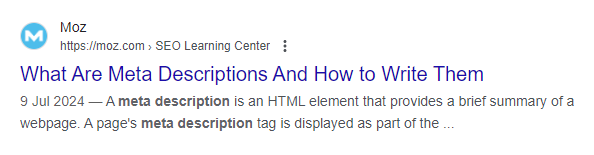
All websites will allow you to write your own for your pages, although the method will be different for each.
Next, make use of the different header options. Most sites will offer Headers 1-5 as standard (usually referred to as H#, e.g. H1), some may have more. These offer two benefits. They tell Google’s search robots how important the different headlines are when deciding to rank your page. H1 means it’s the most important header on the page, and all other headers should be considered as less important, but still more important than the copy that makes up the rest of the page.
You don’t have to use all of them, and the ones you don’t use don’t have to be in order – just remember that the highest number will be the most important.
They also act as a visual cue for your visitors – the biggest headline is the most important, but you’re drawing attention to all the important topics in your article.
Why do you need backlinks?
The rule for backlinks is that higher profile (reputable) sites have better quality links – the fact that they’ve linked to you is seen as a kind of endorsement by Google, and as a result you get improved ranking for your own pages. This works in reverse, too – lots of links from low-quality sites will make your site’s performance worse.
For most sites, it’s a balancing act. There are steps you can take to stop the bad links from being counted, but building your collection of good links can be a challenge. Have a think about any connections you might have that can help, which might be clients, industry connections or accrediting bodies.
The secret to well-written content
This one is much tougher to quantify, but sits across all the other factors. A well-written site will be more appealing to customers and Google’s search robots. It also increases your chances of taking one of the search features that will give your organic search performance a boost by featuring some of your content at the top of the page.
Copywriting is definitely more art than science, so if it’s not your forte then it might be worth looking at outsourcing it. There are also tools that will help with the basics, like Grammarly – it won’t write the copy for you, but it will help make it more readable.
The weapon of last resort here is of course GPT. Catapulting from being virtually unheard of to being the subject of at least 50% of the articles in my news feed at any one time, used the right way, GPT can be incredibly helpful with content creation. The vital thing is to remember that it’s only part of the puzzle – it’s not taken long for people to recognise the distinctive style of content written by GPT, so it should only be part of the process. Use it for research and content ideas, but not to produce anything that’s used without serious finessing from you or your team.
Ask for help if you need it
It’s easy to fall into the trap of trying to do everything yourself, but the fact is, agencies like ours exist because this work is difficult, technically finicky and really intensive. If you’re hitting brick walls everywhere you turn, give us a ring or drop us an email. We can quote for any or all of the work you’re struggling with, and in the long term finding a quicker resolution could well end up saving you money.