
At this point, there’s no escaping the fact that AI (which isn’t technically AI, but that’s the prevailing term so I’m going with it for ease) is going to play a big part in all of our lives for the foreseeable future.
Most of the ways it starts to appear won’t actually involve an appearance at all – it will start to handle tasks, systems and processes which were once the province of humans, and as end users we’ll be none the wiser.
Where it’s more obvious, however, is right in front of you. Many people use ChatGPT, Gemini or Claude on a daily basis, to search, research, and build their personal data pool until they can make a purchase decision on a product or service. AI search will soon become the default option when Googling, and even more people will begin using it as a result.
How do you optimise for AI search?
This is the $64,000 question. ChatGPT has been with us for a few years now, as has a form of Google’s AI in Bard, and then Gemini. Their capabilities constantly evolve, and as they become more embedded in the ecosystem that is search, companies are starting to realise that, particularly with ChatGPT, there is a new marketplace in which they want to be seen.
As with any desirable goal, services showing the route to achieving that success has become an industry in itself. There are already services available which will show you how to appear in more AI searches, and having tested some I’m here to say that… they don’t really work. Or at least, not yet.
The science of getting to the top of Google was decades in the making
It’s easy to forget that there was a time when we didn’t have reliable tools to show us keyword performance in Google. It’s slightly more difficult to forget that during those years Google would frequently move the goalposts, as they’re still doing it, but ask anyone who’s worked in SEO for long enough, and they’ll have a story about a site which was caught in a Google algorithm update and lost a large amount of their keyword rankings, possibly for reasons that remain unknown to this day.
That’s essentially where we are again. Companies are rushing to develop tracking capabilities, and some egos are already making promises that the body can’t cash.
What can AI search tracking currently do?
It can do a bit, although due to the emergent nature some of the price tags struggle to justify the outlay. We can see which keywords led to your company appearing in Google’s AI overviews. We can see which companies are appearing for certain desirable searches. We can even audit a site for “AI readiness”.
That sounds pretty good, for a new industry. Here’s how it actually worked for us, though.
Keywords in AI Overviews
This was helpful. Despite being a small part of the bigger Google AI picture, knowing when companies appear in AI Overviews is useful from a success point of view for your content, and it also can clarify either a lift or drop in traffic to the page as a result.
Which companies appear for which searches
This is where it falls apart a bit. Currently, the more reasonably priced end of the market relies on credits to check for results. In order to find the results, services will suggest searches related to what you want to be found for, but the issue is that unlike Google’s keyword approach, AI needs to run the full query in order to return a result. That means that you’ll need to anticipate every single variation in the way your question is asked, along with having enough credits available to service those searches.
That’s a lot of credits.
AI readiness audit
This is where it fell apart a bit. The particular SaaS we were trying, which I’m not going to shame publicly (but I’m happy to disclose to anyone that wants to drop me an email) carried out an audit on the same site we’d trialled with the company search. The results were that their site was overall in great shape, with a good level of optimisation that would help AI platforms to parse their content.
However, there was a recommendation to include more citations in content (AI has been generally more likely to cite a website which in turn cites other companies and organisations in its content), and a failure which was both telling and puzzling in equal measure – no LLMs.txt file was in place.
What is LLMs.txt?
Currently, most websites use a file called robots.txt to explain how the site is structured to Google’s search robots, which constantly crawl the internet looking for new websites and new content on existing sites.
AI Search platforms use similar technology to gather the data they use to answer questions (at least, they do now – earlier versions couldn’t access any data outside of the set they were trained on, while current models can conduct web searches so they’re up to date). The proposal is that every site would implement the LLMs.txt file as standard to explain to the AI what the site is about, and give answers to the questions it is trying to answer.
However, that model is open to abuse – you could vary the answer from the one on the website, and an AI wouldn’t double-check as the LLMs.txt file is designed to remove the need to visit the website page. This could lead to some gaming of the system in order to gain more mentions, and also makes it even more difficult to ensure that AI search returns accurate and trustworthy information.
The upshot of this is that no AI firm has adopted the LLMs.txt standard, and it’s difficult to imagine they ever will. Searching the live pages of a site provides the same information and reduces the risk of “gamed” information being given out.
And that leads us back to the reason for this article. Why would a service that promises to audit your website for AI-readiness recommend that you implement a file which achieves nothing?
The answer is that no one knows how to optimise for this technology yet.
It makes paying for something that promises the key to success a risky proposition, but hard to resist – if it really is the key, you get ahead of the competition.
How can you achieve success in AI Search?
At the moment, the “science” of this is the same as succeeding in old-school search optimisation. You need to have easy to read, comprehensive information on whatever it is you do, it needs to be accessible to users and search engines, and it needs expert insight that makes it worthwhile for both human and machine readers. We can help you to implement this, just get in touch.
Last night our Group Director, Tina Fairminer, and our Operations Director, Sarah Harris, were at the Indigo at the O2, attending the 2025 eCommerce Awards, where we’re thrilled to announce that Webselect brought home Silver for Best Boutique eCommerce Agency!
We’d like to say a massive thank-you to our incredible team, our clients, and everyone who has supported us on this journey. This recognition means so much – especially because the “Best Boutique eCommerce Agency” category celebrates agencies like ours that deliver highly specialised, optimised, and impactful eCommerce solutions.
What are the eCommerce Awards?
- The eCommerce Awards were launched in 2007 to recognise outstanding performance, innovation, and leadership in the online retail space.
- They bring together the best minds in the industry – brands, agencies, technology providers — to celebrate those pushing boundaries in digital commerce.
- The “Best Boutique eCommerce Agency” category in particular honours smaller, more nimble agencies that go the extra mile in creating bespoke, high-impact eCommerce experiences.
Last night’s ceremony
The awards took place at Indigo at The O2, London on the evening of the first day of the eCommerce Expo. It’s a spectacular venue, and with hosting from Rob Broderick (Abandoman), everyone had a night to remember.
What this means for us
Winning Silver is a testament to:
- Our team’s dedication, creativity, and technical excellence
- The trust and collaboration of our clients
- Our commitment to delivering only the best when it comes to eCommerce solutions
We’re proud to stand among the top agencies in the space, and this win only strengthens our resolve to keep pushing further.
If they’re not already sick of it, we’d love to thank everyone involved – from our staff and contractors to our clients and partners – for helping us reach this milestone. Here’s to even greater things ahead!
When planning a replatforming project or launching a new online store, one of the first questions is whether your business needs a fully bespoke ecommerce website – or whether a tailored platform like SelectCommerce is the smarter move.
At Webselect, we offer both. SelectCommerce is our own ecommerce framework – designed to meet the needs of growing online retailers who want flexibility and performance without reinventing the wheel, and offering three packages designed to meet both your business needs and your budget. But we also know that some businesses need something altogether more custom, which is where SelectCommerce Ultimate comes in.
So how do you decide?
Here’s a guide to help you understand which level of SelectCommerce is the ideal choice – and when a bespoke ecommerce build through SelectCommerce Ultimate might be worth the investment.
When to Choose SelectCommerce
SelectCommerce is built for ambitious ecommerce businesses who want speed, performance, and ease of use – without the cost or complexity of building something from scratch. We offer monthly payment plans that include the price of setup and professional input from our team on how to use it.
Choose SelectCommerce if you:
1. Want to escape the limitations of off-the-shelf platforms
Many ecommerce platforms offer basic templates, but as your needs become more complex – multi-channel selling, third-party integrations, additional functionality – so does the pricing structure. SelectCommerce has been designed to cover everything you need in the monthly price, and to scale with your business as you need it to do more.
2. Need flexibility without the price tag of fully bespoke
With SelectCommerce, you get a platform that’s tailored to your business, but based on proven, well-supported architecture. It has the functionality you need built in, without locking you out of the best features due to compatibility issues or the need for third-party apps.
3. Want to improve site speed, SEO, and conversion rates
We built SelectCommerce using cutting-edge research, and have continued to iterate using feedback from our clients. It’s got great performance, with SEO enhancing features and conversion-rate optimising page layouts.
4. Are scaling – and want a platform that scales with you
Whether you’re expanding your product range, targeting new international markets, or increasing your marketing spend, SelectCommerce is designed to handle growth. It avoids many of the pain points found in mainstream platforms when traffic or operational demands increase.
When to Choose a Bespoke Ecommerce Website
There are times when even the best framework can’t deliver what your business truly needs. If your operations, user journey, or product offering are highly specific, a completely bespoke solution may be the better route. SelectCommerce Ultimate is able to offer this level of freedom.
Go bespoke with SelectCommerce Ultimate if you:
1. Have a highly unique business model
If your ecommerce store involves a non-standard purchasing flow (like subscriptions with complex rules, dynamic product builders, or B2B tiered access), a bespoke platform gives you the freedom to build exactly what you need.
2. Need control over precise components
Bespoke builds are ideal for businesses who want to control every technical and design decision – from database structure and front-end delivery to complex back-end operations and CRM integrations.
3. Are building something that doesn’t exist yet
If you’re bringing a truly original concept to market – something innovative that doesn’t resemble a traditional ecommerce setup – bespoke development lets you create a platform that supports your idea from the ground up.
4. Have the time and budget for a full build
Custom websites take more time and resources than platform-based solutions, and that’s reflected in our price structure. If your timelines and budget allow for this level of investment, and your long-term plans justify it, then a bespoke build can be a powerful competitive advantage.
The first three tiers of SelectCommerce offer a compelling middle ground between generic ecommerce platforms and fully bespoke builds. It’s perfect for businesses that need tailored functionality, high performance, and scalability – without starting from a blank slate.
But we’re also here for those businesses with unique needs that demand a one-of-a-kind solution.
We won’t push one approach over the other, because we believe that the correct answer is always the one that’s best for your business.
Thinking about starting in eCommerce, or moving your site?
Get in touch, and let’s talk through your business’s aims and challenges so we can help you find the SelectCommerce package that you need.
Replatforming your eCommerce site might sound like a daunting prospect, and it’s easy to see why business owners can feel a bit jittery about making the leap. With over 25 years in the eCommerce business, we’ve witnessed firsthand how the idea of switching platforms—moving, say, from WooCommerce or Magento to Shopify or our own solution, SelectCommerce—can stir up a lot of concerns. However, when approached thoughtfully, replatforming isn’t just a technological upgrade; it’s a strategic investment in the future of your business.
Understanding Replatforming
Basically, replatforming is migrating your online store from one platform to another. This change might be needed for several reasons that usually arrive at the same time: your current system is outdated, unable to handle increased traffic, or simply not providing the flexibility your business needs. We can help with a move to Shopify, which is a market-leader, or to our own SelectCommerce, which gives you freedom from scaling app fees by including everything in one price, but the goal remains the same—to set up your business for better performance, scalability, and an improved customer experience.
The common replatforming headaches
Many business owners have the same worries when it comes to replatforming:
- Data Integrity and Downtime: Losing customer data or facing extended periods of downtime can feel like the worst-case scenario. The reality, however, is that with thorough planning and expert execution, you can minimize these risks significantly. A robust migration plan ensures that every piece of critical data—from customer records to order histories—makes it safely to the new platform without causing service interruptions.
- Cost Considerations: The prospect of upfront costs can be intimidating. It’s important to think of replatforming as a long-term investment rather than an expense. The improved functionality, greater scalability, and enhanced customer experience you gain from a modern platform can lead to better operational efficiency and increased revenue down the line.
- Technical Hurdles: Transitioning between platforms often means tackling technical challenges, such as integration issues or compatibility problems with existing systems. While this can sound overwhelming, a step-by-step approach that includes careful planning, testing, and quality assurance can make the process manageable—even for those who aren’t tech experts.
- Managing Change: Every replatforming project brings about changes that affect your team’s workflow and your customers’ experience. Adjusting to a new system can be disruptive initially, but with proper training and support, these transitions can be smoothed out, paving the way for long-term improvements.
The Replatforming Process
A well-executed replatforming project is broken down into several key phases. Here’s an overview of how the process typically unfolds:
- Assessment and Planning:The process begins with an in-depth assessment of your existing system. This stage involves identifying current pain points, evaluating performance metrics, and clarifying your goals for the new platform. At this point, having a detailed migration roadmap is crucial. It serves as a guide to ensure every step is carefully managed, reducing the likelihood of unexpected hiccups along the way.
- Platform Selection:Next comes choosing the right platform. Many businesses find that upgrading from an outdated system to either SelectCommerce or Shopify brings numerous benefits, including a modern design, extensive integration options, and strong community support. With SelectCommerce we include three months of support, so you won’t be left scratching your head with any of the features.
- Data Migration:Transferring your data is one of the most critical parts of replatforming. This phase involves moving all essential information—product listings, customer details, and past orders—from the old system to the new one. Using the right tools and best practices, we can safeguard your data throughout the transition, ensuring everything arrives intact and ready for use.
- Design and Development:Once your data is successfully migrated, the focus shifts to building an engaging storefront that aligns with your brand. This phase is collaborative, involving designers, developers, and key business stakeholders. Whether you’re working with Shopify or SelectCommerce, the aim is to create a site that is both visually appealing and functionally robust.
- Testing and Quality Assurance:Before the new site goes live, thorough testing is essential. This stage covers everything from functionality checks and user acceptance testing to performance evaluations. The goal is to catch any issues early, ensuring that when your customers visit the new site, they enjoy a seamless experience without any glitches.
- Launch and Ongoing Support:Finally, your new site is launched. But the process doesn’t end there. Post-launch support is critical to address any unforeseen issues and to help your team adjust to the new system. Continuous monitoring and optimisation ensure that the platform evolves along with your business needs, keeping you ahead in a competitive market, which is why our Select Supreme package includes ongoing search optimisation support as standard.
How can you tell when it’s time to replatform?
There are a lot of things that might point to a need to replatform, but the most obvious one is pretty simple – time. If your site’s not had an update in the last five years, you’ll already be noticing most of the other warning signs.
These include slow performance on both the front and in the background of the website, difficult to manage or even nonexistent integration with your inventory system, and a general lack of helpful functionality.
We all know that technology moves on at a pace, which is why we replace our computers and smartphones regularly, but the same isn’t always true for our eCommerce platforms. Limited scalability and a clunky interface could be costing you both sales and customer satisfaction, so why not set aside the time to investigate?
Grasping the nettle, taking the bull by the horns and biting the bullet
While the thought of replatforming naturally stirs up a sense of apprehension, you can view it as an opportunity rather than a risk. It’s a bit like moving house – the process can be long, and it’s detail heavy, but once completed the possibilities are endless. The temporary challenges are outweighed by the long-term benefits: a more agile operation, improved user experience, and the capacity to scale effectively with market demands.
We’ve guided numerous businesses through replatforming, helping them transition smoothly and confidently into the future. With careful planning, clear strategies, and ongoing support, the shift to a new platform—be it Shopify or SelectCommerce—can be a transformative step that revitalizes your eCommerce operation. Having the right agency at your side (as a partner, not one that sees you as a product) can really reduce the pain. Drop us a message or give us a call today if you’d like to find out how we can help.
Do you know how well your eCommerce site ranks on Google? Ever wondered what your competition are doing to outrank you?
In this article I’ll look at why you should improve your organic search performance, and some tricks that can help you do it.
Why worry about organic search performance?
The truth is that for most sites, strong search performance and a high-quality user experience are the same thing. Your users want to land on a page that’s easy to use, well-written and helps them to do whatever they want to do. Google’s aim is to send them to the website best able to give them what they want. Your aim is to be the site that Google prefers to send those users to, so they can buy your product.
How Google assesses your website
This breaks down to four key points:
- Your site’s technical performance
- How your users behave
- Correct use of structure and high-quality backlinks
- Well-written content
How to look at your website’s technical performance (for free)
Getting insight into your website’s performance often comes at a premium, so the good news here is that Google offers a free way to check on technical SEO essentials like page loading speed and cumulative layout shifts (CLS). If you’ve ever noticed the text that’s in front of you being pushed down the page as a header image loads, that’s an example of CLS.
The bad news is that fixing the issues it flags usually requires having a good developer on tap. You probably know what’s coming next – we can help with that.
Here’s the link to the Google PageSpeed Insights tool: https://pagespeed.web.dev/
Finding out how your users use your website
There are multiple layers to this, and again, you can get some of the information you need for free, provided you have Google Analytics setup on your site. If you don’t already have it, put it at the top of your to-do list – it offers essential insight, and the only cost would be if you need a developer to implement it. Google offers lots of guidance on how to do it, although as it increases in complexity as a tool it has become a lot more technically demanding.
Google Analytics offers tons of information about how your users are behaving on your site, and can help you understand how long they stay on your site, and how many pages they look at while they’re there. It also offers some basic tracking of scroll depth, which is how far they move down the page – if they never get past the bit they land on, don’t visit other pages and leave immediately, that’s all going to be used against your site when Google decides how it should rank.
How should you structure a webpage?
While there’s not a precise format to building a good web page, there are definitely some best practices to follow. Some of them might not seem linked to SEO, but it’s really all self-supporting – do a great job of selling your page and you’ll get more visitors as a result, which then improves the page’s rank.
Firstly, use the Meta Description to sell your page. The Meta Description is the little precis that appears next to your page name in Google Search, like this:
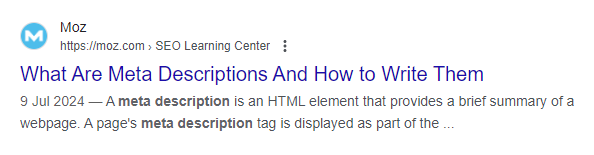
All websites will allow you to write your own for your pages, although the method will be different for each.
Next, make use of the different header options. Most sites will offer Headers 1-5 as standard (usually referred to as H#, e.g. H1), some may have more. These offer two benefits. They tell Google’s search robots how important the different headlines are when deciding to rank your page. H1 means it’s the most important header on the page, and all other headers should be considered as less important, but still more important than the copy that makes up the rest of the page.
You don’t have to use all of them, and the ones you don’t use don’t have to be in order – just remember that the highest number will be the most important.
They also act as a visual cue for your visitors – the biggest headline is the most important, but you’re drawing attention to all the important topics in your article.
Why do you need backlinks?
The rule for backlinks is that higher profile (reputable) sites have better quality links – the fact that they’ve linked to you is seen as a kind of endorsement by Google, and as a result you get improved ranking for your own pages. This works in reverse, too – lots of links from low-quality sites will make your site’s performance worse.
For most sites, it’s a balancing act. There are steps you can take to stop the bad links from being counted, but building your collection of good links can be a challenge. Have a think about any connections you might have that can help, which might be clients, industry connections or accrediting bodies.
The secret to well-written content
This one is much tougher to quantify, but sits across all the other factors. A well-written site will be more appealing to customers and Google’s search robots. It also increases your chances of taking one of the search features that will give your organic search performance a boost by featuring some of your content at the top of the page.
Copywriting is definitely more art than science, so if it’s not your forte then it might be worth looking at outsourcing it. There are also tools that will help with the basics, like Grammarly – it won’t write the copy for you, but it will help make it more readable.
The weapon of last resort here is of course GPT. Catapulting from being virtually unheard of to being the subject of at least 50% of the articles in my news feed at any one time, used the right way, GPT can be incredibly helpful with content creation. The vital thing is to remember that it’s only part of the puzzle – it’s not taken long for people to recognise the distinctive style of content written by GPT, so it should only be part of the process. Use it for research and content ideas, but not to produce anything that’s used without serious finessing from you or your team.
Ask for help if you need it
It’s easy to fall into the trap of trying to do everything yourself, but the fact is, agencies like ours exist because this work is difficult, technically finicky and really intensive. If you’re hitting brick walls everywhere you turn, give us a ring or drop us an email. We can quote for any or all of the work you’re struggling with, and in the long term finding a quicker resolution could well end up saving you money.
It doesn’t matter where you are in your brand’s eCommerce journey, the gathering and surfacing of customer reviews needs to be at the top of your to-do list.
How you do it, though, is a bigger question.
The customer reviews dilemma
The biggest challenge is marrying the two things that will make customer reviews work for you. Do you make them independent, which is what your customers will prefer, or do you include them in your site architecture, giving you full control over which reviews are shown?
Using a dedicated review service can also come with its own set of issues, the largest of which is going to be cost. More well-known platforms offer enhanced services that can be helpful in building your calalogue of reviews, but the price can be significant, and the more reliant you become on these services, the harder it will be to leave if you need to cut costs.
Getting started with client reviews
If you’re not currently gathering reviews, this probably all seems like a problem for a far-off day. So how do you start without breaking the bank? Let’s look at a couple of options that can get you started for free.
A word of warning
Moving between review platforms is very difficult once you’ve started gathering reviews. The only harm in using several free platforms at once is that unless you’re a very busy company, you’ll struggle to create a decently sized review base, but that does mean it’s better to aim your efforts in one direction if you can.
Google Reviews
Somehow, the most universally available reviews are often overlooked. If you’ve set up your business in Google Business (the easiest way to tell is if it appears on Google Maps), you’ll be able to start gathering reviews which will appear on your business listing every time someone searches for you on Google (which is probably almost every time someone searches for your business, full stop).
Try not to end up like this:

The benefits
Huge brand credibility
Completely impartial
Depending on your website, can probably be surfaced easily
The drawbacks
It can be very difficult to get fake reviews removed (although this is improving)
Very manual process to gather reviews
Google account required to leave a review, and not everyone has one (depending on your demographics)
How to implement Google reviews
Firstly, get your business set up on Google Business. You can do that here.
Once that’s done, if you search for your business on Google while logged into your account, you’ll see this menu:

Click on the “Ask for reviews” button and it will give you a link you can send out to customers. That’s where the manual part comes in – other platforms can help you build and send the email, or even automate the process altogether. For a freebie, though, it’s tough to complain.
If you have a CRM system in place, you can use that to send the emails, but if you’re a smaller business, you can draft and send the emails as you would with any other. Provided people are signed in to Google, the link will pop open the review window, so they just need to give you a star rating, and hopefully some nice text to say how happy they are.
Judge Me
Every once in a while, there’s an exception to the rule which says “if it looks too good to be true, it probably is”, and Judge Me is happy to fill that niche when it comes to review platforms. It offers a free version that’s somehow got a decent selection of features, it integrates with sites including Shopify and WordPress, and if you need to scale up the cost is a very reasonable $15 a month, which is around £12 at today’s exchange rate.
The free features include automatic review reminders, which crosses off the issues with using Google Reviews. Upgrading add further features and support for a ton of integrations.
If you’re a new reviews collector, this is pretty hard to beat. Those who already have some reviews they wish to port over are going to find it’s hard to do so, but that is unfortunately a fairly universal issue.
The most important thing to consider here is that Judge Me have lots of positive reviews from their own customers, which both proves their value and the point of this article.
Implementing your own reviews
OK, so we’ve looked at a couple of third party review options. What if you really want to have full control?
This is where it gets a bit awkward. If your website/theme supports user accounts, it’s likely that there’s an option to feature at least product reviews on your pages, or you could ask a developer to build the feature for you if you don’t have it. However, you’ll miss out on those extra features built into the dedicated platforms.
You’ll also have to decide the point at which to intervene, which could look bad if you get it wrong. Research shows that consumers look for a score around 4.5 out of 5, not trusting a score that’s entirely made up of 5’s. It also says that a good response to a bad review can mitigate the effects, while showing that brands are engaging with their customers in a positive way. That’s got to be more of an opportunity than a detriment.
If you’ve got a Shopify site and you’re not currently building a review base, get in touch, and we can help set that up. Why miss out on potential sales when building trust signals can done for free?
Do you know how well your eCommerce site ranks on Google? Ever wondered what your competition are doing to outrank you?
In this article I’ll look at why you should improve your organic search performance, and some tricks that can help you do it.
Why worry about organic search performance?
The truth is that for most sites, strong search performance and a high-quality user experience are the same thing. Your users want to land on a page that’s easy to use, well-written and helps them to do whatever they want to do. Google’s aim is to send them to the website best able to give them what they want. Your aim is to be the site that Google prefers to send those users to, so they can buy your product.
How Google assesses your website
This breaks down to four key points:
- Your site’s technical performance
- How your users behave
- Correct use of structure and high-quality backlinks
- Well-written content
How to look at your website’s technical performance (for free)
Getting insight into your website’s performance often comes at a premium, so the good news here is that Google offers a free way to check on technical SEO essentials like page loading speed and cumulative layout shifts (CLS). If you’ve ever noticed the text that’s in front of you being pushed down the page as a header image loads, that’s an example of CLS.
The bad news is that fixing the issues it flags usually requires having a good developer on tap. You probably know what’s coming next – we can help with that.
Here’s the link to the Google PageSpeed Insights tool: https://pagespeed.web.dev/
Finding out how your users use your website
There are multiple layers to this, and again, you can get some of the information you need for free, provided you have Google Analytics setup on your site. If you don’t already have it, put it at the top of your to-do list – it offers essential insight, and the only cost would be if you need a developer to implement it. Google offers lots of guidance on how to do it, although as it increases in complexity as a tool it has become a lot more technically demanding.
Google Analytics offers tons of information about how your users are behaving on your site, and can help you understand how long they stay on your site, and how many pages they look at while they’re there. It also offers some basic tracking of scroll depth, which is how far they move down the page – if they never get past the bit they land on, don’t visit other pages and leave immediately, that’s all going to be used against your site when Google decides how it should rank.
How should you structure a webpage?
While there’s not a precise format to building a good web page, there are definitely some best practices to follow. Some of them might not seem linked to SEO, but it’s really all self-supporting – do a great job of selling your page and you’ll get more visitors as a result, which then improves the page’s rank.
Firstly, use the Meta Description to sell your page. The Meta Description is the little precis that appears next to your page name in Google Search, like this:
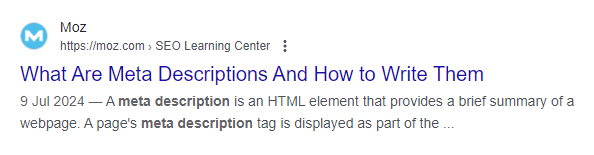
All websites will allow you to write your own for your pages, although the method will be different for each.
Next, make use of the different header options. Most sites will offer Headers 1-5 as standard (usually referred to as H#, e.g. H1), some may have more. These offer two benefits. They tell Google’s search robots how important the different headlines are when deciding to rank your page. H1 means it’s the most important header on the page, and all other headers should be considered as less important, but still more important than the copy that makes up the rest of the page.
You don’t have to use all of them, and the ones you don’t use don’t have to be in order – just remember that the highest number will be the most important.
They also act as a visual cue for your visitors – the biggest headline is the most important, but you’re drawing attention to all the important topics in your article.
Why do you need backlinks?
The rule for backlinks is that higher profile (reputable) sites have better quality links – the fact that they’ve linked to you is seen as a kind of endorsement by Google, and as a result you get improved ranking for your own pages. This works in reverse, too – lots of links from low-quality sites will make your site’s performance worse.
For most sites, it’s a balancing act. There are steps you can take to stop the bad links from being counted, but building your collection of good links can be a challenge. Have a think about any connections you might have that can help, which might be clients, industry connections or accrediting bodies.
The secret to well-written content
This one is much tougher to quantify, but sits across all the other factors. A well-written site will be more appealing to customers and Google’s search robots. It also increases your chances of taking one of the search features that will give your organic search performance a boost by featuring some of your content at the top of the page.
Copywriting is definitely more art than science, so if it’s not your forte then it might be worth looking at outsourcing it. There are also tools that will help with the basics, like Grammarly – it won’t write the copy for you, but it will help make it more readable.
The weapon of last resort here is of course GPT. Catapulting from being virtually unheard of to being the subject of at least 50% of the articles in my news feed at any one time, used the right way, GPT can be incredibly helpful with content creation. The vital thing is to remember that it’s only part of the puzzle – it’s not taken long for people to recognise the distinctive style of content written by GPT, so it should only be part of the process. Use it for research and content ideas, but not to produce anything that’s used without serious finessing from you or your team.
Ask for help if you need it
It’s easy to fall into the trap of trying to do everything yourself, but the fact is, agencies like ours exist because this work is difficult, technically finicky and really intensive. If you’re hitting brick walls everywhere you turn, give us a ring or drop us an email. We can quote for any or all of the work you’re struggling with, and in the long term finding a quicker resolution could well end up saving you money.
Choosing a supplier to work with is something to think carefully about. But if things are not working for you and your e-commerce website, it’s time to make a decision. How do you select an agency to work with when considering replatforming your e-commerce website, management and maintenance of your e-commerce website, or selecting a digital marketing partner?
You are in the business of selling and providing services in your sector, which is hard enough. An e-commerce website is a channel for consumers to research, compare, consider and, hopefully, purchase through. Is spending time on the design, implementation and ongoing upkeep of this where you want to spend your time and expertise? Using an experienced agency who partners with you provides a well of knowledge and experience that ultimately saves you time, money and yes, even more time.
There are many factors that might influence your choice, being a decision maker is sometimes difficult and can come with risk both personally and for your company or team. Is it a case of better the devil you know, or could matching with a great new partner to help you succeed? Being focused only on price could see your website fail when the agency or freelancer runs out of talent. It’s a difficult decision and one that needs to factor in some careful questions. Let’s examine what you should think about and use that as a framework to select a great partnership supplier.
What questions should you ask yourself before choosing an agency partner?
Here we list some areas to think about and ask questions of yourself, your brand and stakeholders as well as the qualities of a partnership agency you are considering working with, to make a positive and well informed decision.
What do you want out of your partner agency?
Think about what service levels are important to you from the outset. Most agency’s will say they are ‘the best’ at e-commerce websites and many can do so very well, however there are some other factors to consider.
Is being available face to face and having an account manager important or at least on video calls – Its easy for a service provider to hide behind ‘digital walls’. being able to discuss an issue or a business problem can be easier to understand and be informed about – there are a lot of solutions marketed that are trying to get you attention so partner experts that know the technology landscape can really help save time and costly mistakes.
What about an agency with staff, many people, resilience, with a variety of skills versus a freelancer. A freelancer will almost certainly be cheaper, but they will not have the resilience as they will get sick, have holidays, have other priorities and may not be there later when you need them.
Is choosing an experienced e-commerce agency important?
Lots of people can build websites using different platforms and Content Management Systems (CMS), and most will have lovely templates that can make a website look beautiful. However, an e-commerce website is not just a website, there is MUCH more to it. You’ll want high-quality User Experience (UX), helpful integrations with relevant digital platforms, data management, CRM, customer records, payment gateways, product management, tax and fee management, technical SEO, sales reporting and VAT reporting, the list goes on, and that’s before getting into SEO optimisation or PPC to improve search engine ranking and conversion. There really is a lot to think about.
What are the experience levels of the agency or freelancer you’re considering? How many e-commerce websites have they built? Consider asking to speak with some of the agency’s clients or to see testimonials or awards. Don’t be afraid to test their credentials.
Why are you doing this?
Before you make any decisions, prepare a business case. It doesn’t have to be huge, but what is driving the decision, and what are the benefits, overhead costs, support levels, costs, flexibility, responsiveness, advice, trust, reputation, relationship… the list goes on, but think about your top 3-4 benefits and write them down. If this isn’t clear in your mind or in the mind of the approvers you will lose track of why you are doing this and what your end goal is. That’s when you risk becoming overwhelmed with options and you’re a sales person’s dream..
Once you’ve crystallised your business case, be clear up front on who makes the decision for the company. Does it require board or shareholder approval? If so, is everyone lined up on why you’re making this change?
How much should it cost to build an e-commerce website?
Do your homework before committing to a spend. Services and technology cost money, so be realistic on what you are trying to achieve and what the potential costs might be to reach your ambitions, you will only be wasting your own time if not. If you don’t know, ask and then qualify it. The phrase buy cheap / buy twice is as true for digital services and e-commerce as it is for anything else. Some questions to get you started::
- What’s the cost of not changing anything – Are you spending time with work-arounds, employing people you don’t need to, limited in your growth and delaying changes because you don’t have control?
- Ask questions around migration costs, design costs, integration costs and operating costs of the chosen platform or service. Will you have control of things, and what are the support options?
- What would happen if your website grew and you had more customers and made more sales? Would this end up costing you more, and would that satisfy a cost/benefit analysis?
- Are the costs transparent? What are the fees and costs that are not being discussed. An e-commerce site is not just a website, it required ongoing support, management, hosting and probably integration management as it is a key part of your revenue.
Experience in your sector
This is a really interesting question. Is it important that an agency is a specialist or has a proven track record in your particular sector?
The answer here depends on your business type more than anything.
If you are selling frying pans online, then building an e-commerce website does not necessarily need a frying pan-specific agency. E-commerce websites are about data, structure and integrations, experience in e-commerce websites is the important factor, experience in the frying pan sector is secondary.
However, there are some business areas where you might want to look for specialists, such as; if you are selling cheese online and you are looking for digital marketing then a food and drink digital marketing specialist is likely to be a better option than a generic digital marketing agency.
Questions to ask a new e-commerce partner
Does the platform support multiple languages and currencies?
This is something you will want to understand from the outset even if you are not currently trading internationally. Many platforms provide this, however the cost structure can be wildly different, with additional fees and commission. There are platforms out there with this built-in as standard, such as SelectCommerce.
Is training and onboarding support available?
Consider the impact of change in a CMS or an e-commerce platform has on the users and administrators of the website (i.e. you and your team). It can be huge and is not to be considered lightly. Most platforms and CMS have help and user guides, Youtube videos and other digital support but how much time and energy do you or your staff have to go and learn this? Even if you do the ‘training’ this way there’s always the chance of a scenario that you can’t solve, which slows everything down. Having real people onboard you to a platform, provide screen-shared training and be available for user support can be the edge in getting up to speed quickly and getting a smooth ride out of your investment..
Are there any hidden costs or additional fees?
Really take time to understand the fee structure of various services and platforms offered. Headline fees are usually the start of a list of fees that mount up.
For instance, the headline fee for Shopify Basic fee is £19 per month. But the small print says this is billed annually in advance. And also that their cart commission is 2% of the value of the transaction and they’ll take a 25p commission for each transaction. That’s before you start to integrate apps to get the features you want. If you want a fairly feature rich website then the app costs can reach thousands a month! Shopify is a great product but look carefully at the fee structure and refer to your business case before you commit to anything.
Not all e-commerce platforms structure fees in this way – some are much clearer to understand and model over time to understand the true cost of ownership. A good agency will help you understand this to make informed decisions.
Will the platform be able to adapt to your business’s evolving needs?
Businesses change all the time with new services and technology come to market, service provides change at renewal time, range of products and offers change, new market territories and many other factors mean that an e-commerce website is never static.
Understanding how the platform and the agency can support that change and hopefully grow is an important question. The investment in a new e-commerce site and its integrations is significant and you want it to be future proof.
Ask about how changes are priced. Consider potentially negotiating a retainer at a reduced rate if you think there will be a lot of change or maintenance. If going to apps for instance used in the Shopify ecosystem, pay attention to the volume pricing breaks for some of these apps. For instance some apps have a price up to a certain number of users or requests and then there is a higher price if that’s exceeded – being clear on that up front gives you some understanding of the flexibility and what that cost of change might be.
Does it allow for integration with existing systems (e.g., CRM, ERP, marketing automation)?
Many businesses have existing business applications and services that the e-commerce website should fit around. These could be existing Customer Records Management (CRM), Enterprise Resource Management (ERP) systems, finance systems e.g. Sage or other marketing integrations for Email marketing or Customer Experience Platforms (CEP). There will be existing data management and workflow that is well understood by the company and the people in it.
Having a flexible e-commerce platform that can provide direct integrations with these systems is the best solution, to efficiently pass the right data around the systems and have a ‘single source of the truth’ is absolutely key to success. Ask questions around the capability of the platform and the people who support it, are they data and software engineers who are competent. Open API’s are available on many systems but integrating is a very specialist job to get right and to protect your valuable data.
How can I off-board from a e-commerce platform if I need to?
Things change and sometimes changing platform or supplier is the right thing to do so before putting your entire e-commerce channel on a platform and the associated revenue stream, understand what the off boarding process is.
Take the time to understand that you can straightforwardly take your data, customer data, orders, history, images etc. from one platform to another and that the formats are compatible.
Most good platforms or agencies will provide a mechanism for you to either get this yourself or request it in a format you need.
Also consider understanding what off-boarding support the agency will provide. Any new agency or platform will likely require some additional information or data structure that makes their life easier. A good agency will support this to help you move away.
Conclusion
This has been a very high-level look at how to choose a digital agency for e-commerce. It can be a bit daunting knowing who are the right people to work with, a mate of a mate, your cousin or a big flashy agency. without the right thinking, questions and planning could be a painful mistake, which is why we’re always ready to help if you need us. We’ve helped companies from a wide variety of industries to design, build and support e-commerce websites and would love to help you do the same.
When it comes to launching an eCommerce website, choosing the right platform is crucial for the success of your online business. With numerous options available, one platform that often stands out is Shopify. Known for its user-friendly interface, robust features, and scalability, Shopify has become a popular choice for entrepreneurs and businesses looking to establish an online presence. However, like any other platform, Shopify has its own set of pros and cons that should be carefully considered before making a decision. In this blog post, we’ll explore the advantages and disadvantages of building a Shopify website compared to other e-commerce platforms.
Pros of Building a Shopify Website:
1. User-Friendly Interface: One of the biggest advantages of Shopify is its user-friendly interface. With intuitive tools and a drag-and-drop editor, Shopify makes it easy for users to build and customise their online stores without any technical expertise.
2. Robust Features: Shopify offers a wide range of built-in features and functionalities, including inventory management, order processing, payment gateways, and marketing tools. Additionally, Shopify’s App Store provides access to thousands of third-party apps and integrations to further enhance the functionality of your store.
3. Scalability: Whether you’re a small startup or a large enterprise, Shopify can scale with your business. With flexible pricing plans and the ability to handle high traffic volumes, Shopify allows businesses to grow and expand their online operations without worrying about technical limitations.
4. Mobile Responsiveness: In today’s mobile-centric world, having a mobile-responsive website is essential for success. Shopify websites are optimised for mobile devices, ensuring a seamless shopping experience for customers across desktop, tablet, and smartphone devices.
5. Security and Reliability: Shopify prioritises security and reliability, offering robust security features, SSL encryption, and PCI compliance to protect customer data and transactions. With 99.99% uptime and automatic backups, Shopify provides peace of mind to merchants and ensures uninterrupted operation of their online stores.
Cons of Building a Shopify Website:
1. Transaction Fees: While Shopify offers a range of pricing plans, merchants will incur transaction fees for each sale made through the platform, in addition to credit card processing fees. These fees can add up, especially for businesses with high sales volumes, impacting overall profitability. If you are a growing business and can plan ahead, work out what the potential costs might be over time.
2. Limited Customisation: While Shopify allows for customisation through themes and apps, some merchants may find the platform limiting in terms of design flexibility and customisation options compared to other e-commerce platforms. Advanced customisation may require coding knowledge or hiring a good agency, ideally who is a partner, adding to the cost and complexity.
3. Dependency on Third-Party Apps: While Shopify’s App Store offers a vast selection of third-party apps and integrations, relying too heavily on apps can lead to dependencies and potential issues with compatibility, performance, data management and security. Merchants should carefully vet and manage the apps used on their Shopify stores to ensure optimal performance and security. In addition apps may go unsupported by the 3rd party which may be a risk.
4. Subscription Costs: While Shopify offers a range of pricing plans to accommodate different business needs, the subscription costs can add up over time, especially as your business grows and requires additional features or resources. Merchants should carefully consider their budget and long-term goals when choosing a Shopify plan.
5. SEO Limitations: While Shopify provides basic SEO features and tools, some merchants may find the platform limiting in terms of advanced SEO capabilities compared to other e-commerce platforms. Optimising product pages, meta tags, and URLs for search engines may require additional effort and customisation, hire a good professional to help if you can’t do this yourself.
Building a Shopify website offers numerous advantages, including a user-friendly interface, robust feature set, scalability, and security. However, merchants should also consider the potential drawbacks, such as transaction fees, limited customisation, dependency on third-party apps, subscription costs, and SEO limitations, before committing to the platform. Ultimately, the decision to choose Shopify or another e-commerce platform should be based on your specific business needs, budget, technical requirements, and long-term goals.
Ready to launch your eCommerce website? Sometimes deciphering which is the best business fit for you can be challenging, we’re happy to help you find the best fit for your business.
The awareness around sustainability and business practices is becoming an increasingly important issue across industries, and e-commerce is no exception. As businesses recognise their roles in environmental impact, there’s a growing need for e-commerce websites to embrace sustainability practices.
From reducing carbon footprints to meeting consumer demands, businesses need to better understand why embracing a more environmentally aware approach is good for both the planet and your customers.
There isn’t a one size fits all, and every business and online retailer will have different challenges that they face when they start to pivot to embracing a greener approach to their operations. However, we have grouped 5 main areas where you can start on your sustainability journey.
Addressing Climate Change
Climate change isn’t just a buzzword any more – it is one of the biggest challenges we face, and businesses play a significant role in mitigating its effects. E-commerce websites contribute to carbon emissions through various channels, including transportation, packaging, and energy consumption, many of which are not immediately obvious.
By adopting sustainable practices such as using renewable energy to power computers, servers and businesses, optimising logistics, using sustainable materials and reducing waste, e-commerce businesses can minimise their carbon footprint and contribute to mitigating climate change.
Meeting Consumer Expectations
Consumers are the most environmentally aware than they have ever been before, and they often expect the businesses they support to share their values.
Studies show that a growing number of consumers prefer to purchase from brands that demonstrate a commitment to sustainability, and have long term, carbon neutral goals. By integrating sustainability into your operations and communications, e-commerce websites and businesses can attract environmentally conscious consumers, build brand loyalty, and deliver higher customer satisfaction.
Reducing Environmental Impact
The increased reliance of buying online has led to an increase in packaging waste, energy consumption, and carbon emissions associated with transportation. Sustainable e-commerce practices, such as using eco-friendly packaging materials, optimising delivery routes, and promoting responsible consumption, can help reduce the environmental impact of online shopping. By minimising waste and conserving resources, e-commerce websites play their part. It can be easier to say than to do, but thinking through the whole process and the other services that you use in your supply chain matters. In carbon terms this is often described as scope 3 emissions. There are many tools and methodologies out there that can help you understand this such as B Labs / B corporation and the Carbon Trust.
Enhancing Brand Reputation Clearly and Truthfully
Building a sustainable brand can have a positive impact on reputation and brand image. Consumers are more likely to trust and support businesses that prioritise environmental sustainability, especially younger audiences who are more in touch with the growing need to be more climate conscious.
By demonstrating a commitment to sustainability through transparent practices, certifications, and initiatives, e-commerce websites can enhance their brand reputation, attract socially conscious customers, and foster long-term relationships with stakeholders. However, avoid ‘green washing’ this is the practice of saying the right things but not behaving and putting into practice the right things. This can have significant negative effects and can be spotted by consumers, regulators and governments who can intervene.
Take a recent case published at Gov.uk where the CMA in July 2022 examined concerns about the way some firms’ products are being marketed to customers as eco-friendly.
The investigation scrutinised environmental claims made by ASOS, Boohoo and George at Asda about their fashion products, including clothing, footwear, and accessories. Several issues were examined, including whether:
- The statements and language used by the businesses are too broad and vague, and may create the impression that clothing collections are more environmentally sustainable than they actually are
- The criteria used by some of these businesses to decide which products to include in these collections may be lower than customers might reasonably expect from their descriptions and overall presentation.
The outcome, released March 2024, has led to ASOS, Boohoo and George at Asda have signed formal agreements to use only accurate and clear green claims. The undertakings secured by the CMA commit ASOS, Boohoo and George at Asda to change the way they display, describe, and promote their green credentials, meaning millions of customers can expect to see clear and accurate green claims.
The cost, embarrassment and brand harm as a result of over claiming green credentials will have been measurable.
Driving Innovation and Efficiency
Embracing sustainability can drive innovation and efficiency within e-commerce businesses. Sustainable practices encourage businesses to rethink traditional processes and find innovative solutions to reduce environmental impact whilst remaining commercially viable. This can vary from business to business and can range from merchandise solutions to marketing technology.
Sustainability is not a buzzword—it’s a business imperative. As more businesses embrace becoming B Corporations, e-commerce websites have a unique opportunity to lead the way in building a greener future by embracing sustainable practices. By addressing climate change, meeting consumer expectations, reducing environmental impact, enhancing brand reputation, and driving innovation, e-commerce businesses can be part of the solution in creating a more sustainable future.